Back to Flick & Dave's
website
|
Sunday July 8For those who are not aware, we're travelling with a group through World Expeditions, an Australian company that used to specialise in Himalayan treks but now operates world wide. In Peru they are represented by Tambo Treks, a local company headquartered in Cusco which they co own. Tambo is an Indian word meaning resting place: the way stations along the Inca trail. There are 20 people on the tour (all Australians and NZers). Due to WE�s policy of small group adventures we have been split up into two groups of 10, each with separate transport and guides. However, we�re staying in the same hotels and generally bump into each other at various times during each day. The tour is very well organised, and we�re packing far more into the time than would have been possible travelling independently, while retaining a lot of flexibility due to the small size of the group. Our guide�s name is Gustavo, a Cusco local. Peru�s tourism industry is well regulated, and to enter the various historic sites guides must be licensed, which means having completed a three year university course followed by a two year internship.
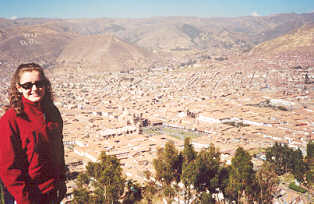
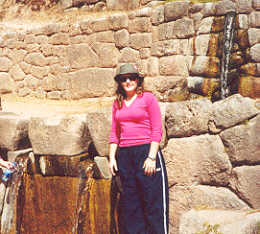
As such Cusco features a hodge-podge of architectural styles, with original Incan walls serving as the foundations and sometimes lower stories of colonial buildings.
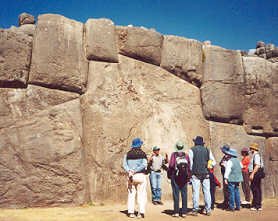
While some of the structures are monumental in scale and the architectural principals very sophisticated, we have been struck by the generally small size of interior rooms compared to the enormous edifices created by the ancient Greeks almost 2000 years earlier. Still, some of the sites are quite breath taking. The other thing the Incas were famous for was their extravagant use of gold and silver, unfortunately plundered by the Spanish and subsequent explorers. However, the colonials made extensive use of gold leaf in the many churches around Cusco and the main cathedral. They also integrated aspects of Incan religion and mythology, such as the mountain like (mother earth) depictions of the Virgin Mary in their art.
And of course, the Cusquena music Festival. Martin, our Amazon guide had alerted us to this, the Sweetwaters of Cusco albeit on a slightly less drug induced level. Flick and I braved the ticket touts and entered through commendably tight security an environment that resembled a louder and more rock oriented carols in the domain. Main stage with a huge lighting and sound system, giant video screens, and succession of top local and international acts. We bopped away in the crowd of 30,000 or so, drinking the sponsor's product and eating pizza from the food hall at the edge of the park. Unfortunately we succumbed to the cold night air and slight light headedness due to the high altitude and retired some time before the main act was scheduled to start (at about 1am). Later in the morning I discovered that the light headedness probably wasn't only due to the altitude.
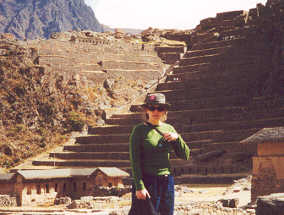
On Sunday morning we left Cusco bound for the so called Sacred Valley of the Incas and the head of the Inca Trail. Stopping at a number of remarkable Incan sites along the way, as well as a lively village market (where Flick was remarkably restrained) we descended about 1,000m into a verdant valley that apparently produces about 200 varieties of spud and almost as many types of corn. The incredibly steep mountains now loomed rather ominously above us (the Incans� perfected the art of creating farming terraces to make best use of the precipitous landscape). We spent our last night pre-trail in a beautifully restored Spanish style villa, our room featuring a sitting room and loft style bedroom with dormer windows overlooking a central courtyard with views to the stunning Mt Veronica (5,800m) beyond. Simon Bolivar, one of South America's two main independence fighters had stayed there during his crusade to rid the continent of Spanish domination. Our trail gear was transferred into large duffel bags and our suit cases in storage back in Cusco. Our water bottles were filled and we were ready to commence our pilgrimage to the religious centre of the Incas - the fabled Machu Picchu.
|